A new era for European industries: The Clean Industrial Deal
The European Commission’s Clean Industrial Deal aims to strengthen Europe’s industrial competitiveness while accelerating decarbonisation. By tackling high energy costs, fostering innovation, and supporting investment, it provides a comprehensive framework for sustainable industrial transformation.
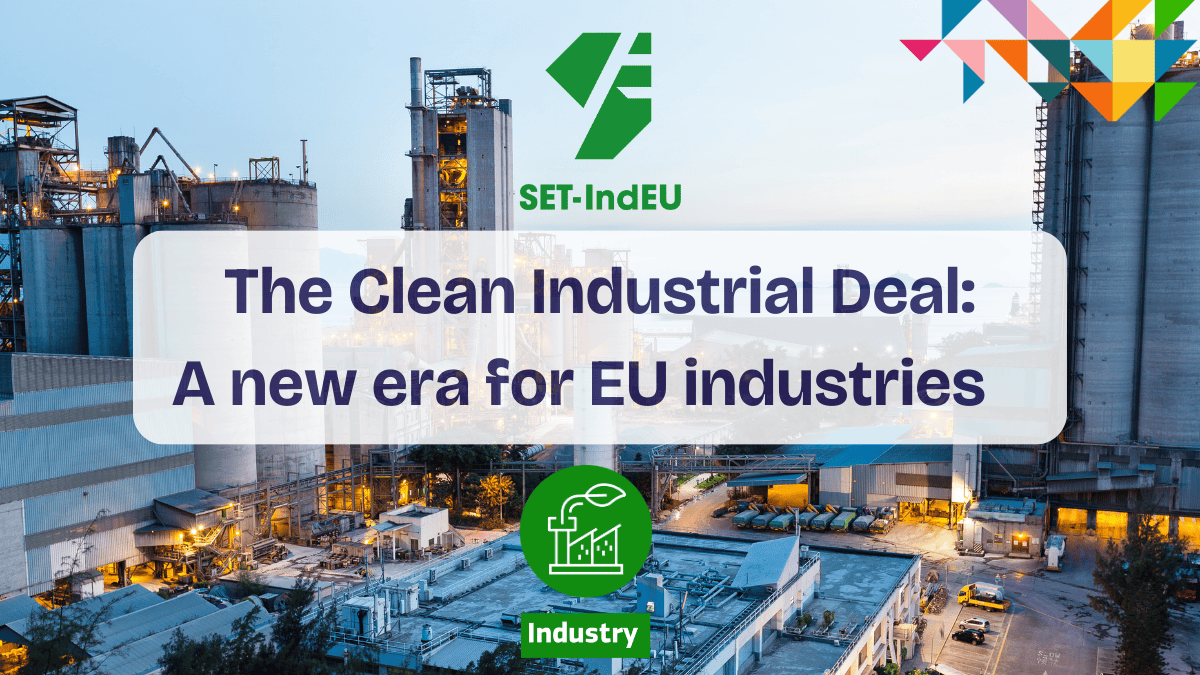
The European Commission has launched the Clean Industrial Deal as a strategic initiative to reinforce Europe's industrial competitiveness while driving forward its green transition. Announced on 26 February 2025, the Deal responds to the mounting challenges faced by European industries, particularly energy-intensive sectors, due to high energy costs, global competition, and the need for decarbonisation. By introducing regulatory adjustments, financial support, and measures to ensure affordable energy, the Clean Industrial Deal seeks to create a more resilient and sustainable industrial base in Europe.
For process industries, which play a pivotal role in the EU’s economic and environmental landscape, this initiative marks a critical shift towards a cleaner and more competitive future. The Deal builds upon existing EU climate and industrial policies, complementing the Green Deal and the Net-Zero Industry Act. By aligning financial and regulatory mechanisms, it ensures that Europe’s energy-intensive industries can transition without losing their competitive edge on the global market.
Addressing high energy costs and securing long-term supply
One of the primary challenges for energy-intensive industries in Europe is securing affordable energy. The Affordable Energy Action Plan introduced contextually includes eight actions aimed at lowering energy costs and stabilising long-term supply. Key measures involve promoting long-term electricity supply agreements, streamlining permitting procedures for critical energy projects, and reinforcing power grids. The EU aims to lower wholesale electricity prices by an average of 40%, providing much-needed relief to industrial consumers.
Ensuring affordable energy also requires investment in modern energy infrastructure. To support the integration of renewable energy and improve grid stability, the Deal allocates €1.5 billion to upgrade power networks. A stronger grid will ensure that industries such as chemicals, steel, and cement, which rely on stable and continuous energy supply, can transition to cleaner energy sources without disruptions. By enhancing grid capacity and simplifying regulatory procedures, the Clean Industrial Deal seeks to make green energy more accessible and cost-effective for industrial users.
Unlocking investment for clean manufacturing and industrial transformation
To support Europe’s industries in their transition, the Clean Industrial Deal proposes mobilising €100 billion to boost EU-based clean manufacturing. A significant portion of this funding will target energy-intensive industries, enabling them to adopt advanced low-carbon technologies. The introduction of an Industrial Decarbonisation Bank will further facilitate public and private investments, ensuring financial backing for projects that drive emissions reduction.
For process industries, securing such investment is crucial to accelerating innovation and scaling up new technologies. The Clean Industrial Deal’s emphasis on state aid flexibility allows for targeted financial support, reducing bureaucratic hurdles and ensuring faster deployment of decarbonisation measures.
Promoting circularity and resource efficiency in industrial production
In parallel with efforts to decarbonise, the Clean Industrial Deal prioritises resource efficiency by advancing circular economy principles. The introduction of a new Circular Economy Act focuses on improving recycling processes and reducing raw material dependencies.
Circular economy strategies can enhance competitiveness of process industries by cutting costs and ensuring a stable supply of critical raw materials. This regulatory push, combined with financial incentives, offers industries a pathway to improve sustainability without compromising production capacity.
Enhancing global competitiveness and securing supply chains
The Clean Industrial Deal acknowledges the importance of maintaining Europe’s industrial leadership in global markets. By fostering international trade agreements focused on clean technologies and securing access to critical raw materials, the EU aims to strengthen supply chains and reduce reliance on non-European suppliers.
For energy-intensive industries, these measures provide a safeguard against supply disruptions and price volatility. The strategy also reinforces the role of European process industries in global value chains, ensuring that the transition to clean manufacturing does not lead to industrial offshoring.
Implications for the SET Plan IWG-Industry and SET-IndEU
The Clean Industrial Deal aligns closely with the objectives of the SET Plan IWG-Industry and SET-IndEU project. By providing financial mechanisms, regulatory support, and energy cost relief, the Deal creates a more favourable environment for the adoption of energy-efficient technologies and renewable energy solutions.
As industries navigate the twin challenges of competitiveness and decarbonisation, the IWG-Industry and SET-IndEU stands as a key platform to support knowledge exchange, promote best practices, and facilitate collaboration between industry stakeholders, research institutions, and policymakers. The Clean Industrial Deal reinforces these efforts, offering a structured policy framework that enables industries to transition towards sustainability without compromising growth.
By integrating innovation, investment, and regulatory improvements, the Clean Industrial Deal sets the stage for a more resilient and future-proof European industrial landscape. For process industries and energy-intensive sectors, this initiative represents a pivotal opportunity to lead Europe’s green transformation while maintaining economic strength.