
White paper on the modular plant approach
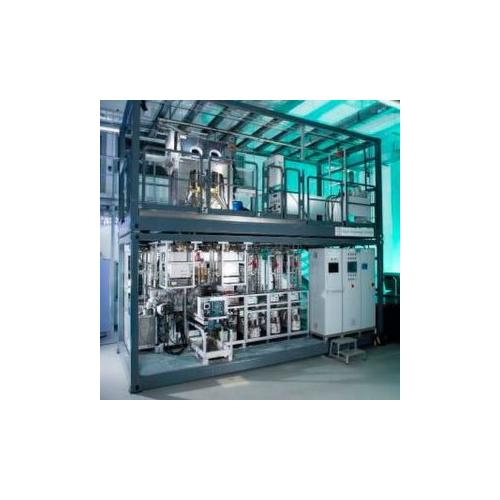
The DECHEMA paper on ‘MODULAR PLANTS’ summarizes results from recently finished public funded projects which demonstrated successfully the economic and technical benefits of a flexible and modular plant concept for the production of fine and specialty chemicals as well as pharmaceuticals. The paper discusses the need for further developments, e.g. to work on standardized interfaces/standards for such modular automation, reliability of modules/sensors/performance control systems, new continuously working downstream processing units, enabling business/service models and other boundary conditions such as regulations to build and operate such units.
Important project examples include the FP7 ‘F3 Factory’ project's results demonstrating clearly the advantages of operating modular continuous plant processes that are more economical and sustainable than current operations and only possible by new type of equipment design, advanced digital process control and online process analytics (PAT).
Built on the ‘F3 Factory’ project concept, the H2020 funded SPIRE project ‘CONSENS’ as one example is advancing the continuous production of high-value products that meet high quality demands in flexible intensified continuous plants by introducing novel online sensing equipment and closed-loop control of the key product parameters. If applied in industry, the outcomes of the projects could result in significant cost savings and reduction of CO2 emissions (176,000 t/y), less consumption of solvents in pharmaceutical and specialty industry, and in the important acceleration in the development of new products (2x faster additional innovations and 2x shorter times-to-markets).