Towards Highly Efficient and Sustainable Energy Use in European Industries: Main conclusions from the SET Plan IWG-Industry 2025 Annual Event
The SET Plan IWG-Industry Annual Event was held in Kraków, Poland on 2 June, as a satellite event of IndTech 2025.
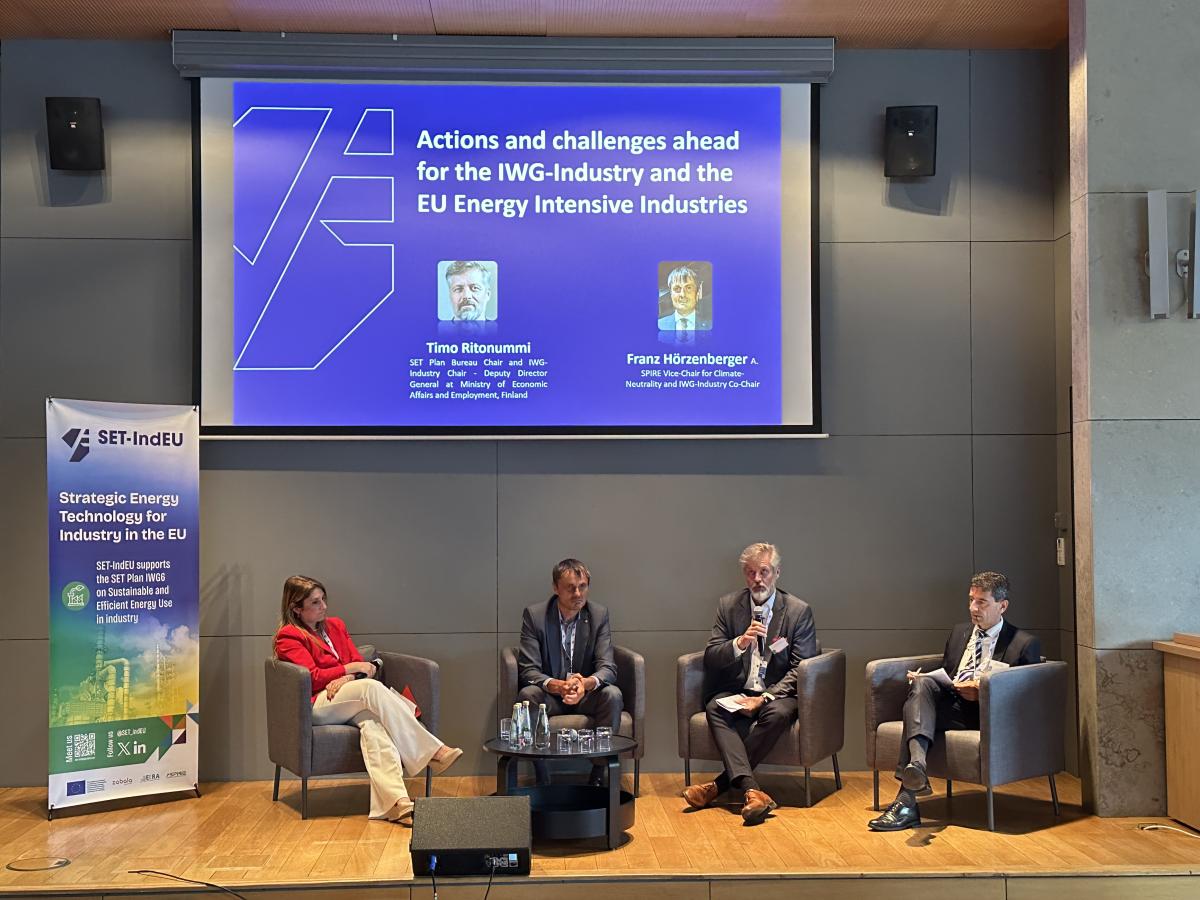
On 2 June 2025, the SET Plan Implementation Working Group on Sustainable and Efficient Energy Use in Industry (IWG-Industry) held its annual event in Kraków, Poland, titled “Towards Highly Efficient and Sustainable Energy Use in European Industries”. Organised with the support of the SET-IndEU Secretariat, the event took place as a satellite event of IndTech 2025, the EU’s flagship conference on Industrial Technologies and Materials for a Sustainable Europe, hosted under the Polish Presidency Semester.
The event gathered industry stakeholders, researchers, and policymakers, to discuss innovation pathways that support industrial decarbonisation and competitiveness within the evolving Clean Industrial Deal and SET Plan framework. The event was labelled as part of the European Sustainable Energy Week (EUSEW), reinforcing its role in advancing the EU’s sustainable energy agenda.
This year’s discussions centred on two major priorities for European industry: electrification and circularity. During two thematic panel sessions that featured EU-funded projects, regional strategies, and technical perspectives, participants discussed scalable solutions for energy flexibility, heat storage, carbon capture, and circular process integration – key pillars of the EU’s evolving Clean Industrial Deal.
The event also showcased national contributions from Polish-based projects and institutions such as CELSA Poland and the Silesian University of Technology, highlighting Poland’s research and innovation (R&I) priorities and funding mechanisms within the broader industrial transformation agenda.
The discussions underscored the need for better alignment between innovation, regulation, and investment to accelerate industrial decarbonisation. They also emphasised the role of regions in driving systemic transformation, ensuring that local and national initiatives contribute effectively to EU-wide industrial strategies.
Panel 1: Electrification and Flexibility
The first panel, “Electrification and Flexibility” focused on technologies enabling flexible and electrified industrial operations, featuring the Horizon Europe projects ISSDEMO, LoCoMoSa, and FLEX4FACT, which presented solutions for digital energy optimisation, thermal energy storage, and integration of renewables into energy-intensive industrial processes.
Panellists stressed the importance of cost-effective, modular, and retrofittable solutions to enable a smooth transition for existing industrial facilities. Common enablers identified included: regulatory clarity, interoperable digital platforms, and investment in grid-readiness and energy storage.
Panel 2: Circularity and CCSU
The second panel, “Circularity and CCSU”, explored circular economy strategies and carbon capture, storage, and utilisation (CCSU), with presentations featuring the projects EMPHATICAL and Oxy-Kraft, illustrating decarbonisation of the steel and cement sectors, retrofitting infrastructure for CO₂ capture, and regional transition planning, including initiatives in Silesia. Speakers also highlighted financing and permitting as key barriers to widespread adoption, stressing the need for public-private collaboration, regional roadmaps, and integration of industrial policy with cohesion and climate objectives.
The event concluded with reflections on the ongoing revision of the SET Plan governance. The new framework seeks, among other things, to better align European and national R&I efforts for industry, improve synergies between funding programmes, and accelerate replication and scaling of clean technologies across Europe.
By bringing diverse actors from industry, policy, and research, the 2025 Annual Event created a collaborative space for building consensus, sharing knowledge, and mobilising joint actions. Stakeholders reaffirmed the strategic role of the IWG-Industry and the SET-IndEU project in fostering cross-sector collaboration, promoting replicable innovations, and supporting the EU’s 2030 and 2050 decarbonisation targets.